Why Grow Lights Are the Single Most Important Investment in Your Hydroponic System
Hydroponics strips away the variables. Soil? Gone. Guesswork on nutrients? Solved. Water inconsistency? Eliminated. Temperature swings? Controlled.
But take away quality light, and your perfectly tuned system collapses. Your plants are essentially running a marathon — in a pitch-black tunnel, with no finish line in sight.
The Numbers That Will Change How You Think About Lighting Forever
THE 2026 INDOOR GROWING REPORT — KEY STATS
| Metric | The Reality |
|---|---|
| 94% | of successful indoor hydroponic growers cite lighting as the #1 yield factor |
| 3 to 5x | faster growth under premium LEDs vs. windowsill sunlight |
| 70% | energy savings: modern LEDs vs. legacy HPS systems |
| 365 | growing days per year, unlocked the moment you flip the switch |
| 2.7+ | minimum PPE rating (µmol/J) you should accept in 2026 |
Welcome to the Future of Indoor Growing
Imagine this: it's the dead of winter. Frost has painted lacy patterns across your windows. The world outside is muted in shades of gray and white. Yet you walk into your kitchen, reach into a lush indoor garden glowing with soft violet light, and harvest a basket overflowing with vibrant basil, sun-kissed tomatoes, and crisp emerald lettuce.
This isn't a glimpse of some distant utopia. This is 2026. This is happening in apartments, basements, garages, and spare bedrooms all over the world. Right now.
And here's the secret nobody wants to tell you: if your hydroponic plants look more like sad survivors than thriving green royalty, the culprit is almost never your nutrients, your pH, or your reservoir temperature.
It's your light.
> "Light isn't just food for your plants — it's the conductor of every biological symphony happening inside them. Get this one thing right, and everything else falls into place."
Choose the wrong light, and nothing else matters. Choose the right one, and your plants will reward you with explosive growth, jaw-dropping yields, and flavors that put grocery store produce to absolute shame.
Ready to transform your grow forever? Let's dive in.
Translation: Your light is doing more than illuminating a room. It's pumping liquid energy into every leaf, every stem, every fruit. Skimp here, and you're handicapping the entire operation.
See It In Action: A Visual Tour of Modern Hydroponic Lighting
Before we go deeper, watch how today's growers are using cutting-edge lighting setups to transform spare closets into year-round produce factories. This will reframe everything you think you know.

The Five Major Types of Grow Lights — And Which One Is Right for YOU
Not all grow lights are created equal. Some are racing sports cars. Some are reliable pickup trucks. Some are aging muscle cars with a thirst for power. Here's your no-fluff field guide.
1. Full-Spectrum LED Grow Lights — The Reigning Champion
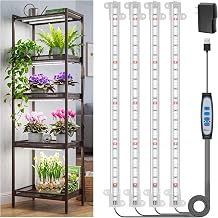
These are the rockstars of 2026. Sleek. Whisper-quiet. Surgically efficient. Packed with a spectrum so close to sunlight that your plants literally cannot tell the difference between your basement and a Tuscan hillside.
Best for: Honestly? Almost everyone. Beginners. Hobbyists. Commercial operators. The whole spectrum of growers.
The Upside:
- Whisper-cool operation — your AC bill will send you a thank-you card
- 50,000+ hour lifespan (we're talking a decade of nightly use)
- Customizable spectrums on premium models — tune for veg, bloom, or anything between
- Lowest long-term cost of ownership of any lighting type, period
- Higher upfront investment that makes some growers flinch
- Quality varies WILDLY — the cheap LED trap is real and ruthless
2. HPS (High Pressure Sodium) — The Old Workhorse
The grizzled veteran of grow rooms everywhere. HPS lights bombard your canopy with warm, golden, flowering-friendly photons that have been triggering massive yields since before LEDs were cool.
Best for: Large-scale flowering operations where upfront cost trumps long-term efficiency.
The Upside:
- Wallet-friendly upfront cost
- Decades of proven results
- Brutally effective during the flowering stage
- HOT. Like, uncomfortably hot. Cooling becomes its own budget line.
- Energy-hungry — your utility provider will notice
- Bulbs degrade fast and need annual replacement
- The era is ending; support and innovation are drying up
3. CMH (Ceramic Metal Halide) — The Connoisseur's Choice
If HPS is the loud uncle, CMH is the sophisticated cousin who returned from culinary school. It delivers a stunningly balanced spectrum that produces denser buds, richer flavors, and more aromatic harvests.
Best for: Craft growers chasing premium quality, terpene complexity, and visual stand-out crops.
Quick Take: Not the cheapest. Not the most efficient. But the harvest? Chef's kiss.
4. T5 Fluorescent — The Gentle Giant for Seedlings
Soft. Affordable. Forgiving. T5s are the nursery nurses of the grow light world — perfect for tender clones and seedlings that would crisp under anything more aggressive.
Best for: Propagation, microgreens, herbs, leafy greens, and any tender starts that need a gentle touch.
5. Hybrid Systems — The Best of All Worlds
Why choose just one weapon when you can wield them all? Combine LEDs with HPS or CMH and harness the strengths of each technology — full-spectrum coverage with the flowering punch of legacy lights.
Best for: Advanced growers who treat their grow room like a laboratory.
The 2026 Buying Checklist: Don't Spend a Single Dollar Until You Read This
The grow light industry is awash in marketing fairy tales. "1000W equivalent!" "Sunlike spectrum!" "Massive coverage!" — most of it isn't worth the pixels it's printed on.
Before you swipe that card, demand straight answers to these six questions:
1. What is the PPFD at my actual canopy distance?
This is the photon density actually hitting your plants — not what the manufacturer measured in a lab, three inches from the diodes, with the lights off in the rest of the building.2. What does the full-spectrum graph look like?
Demand to see the spectral chart. Look for balanced coverage across UV, blue, green, red, and far-red. If they won't show you the graph, they're hiding something.3. What's the wattage draw AT THE WALL?
Marketing watts are fantasy. Real draw is reality. A "1000W" LED that pulls 240W at the outlet isn't lying — but it's not what beginners think they're buying.4. What's the coverage footprint at MY grow height?
A "4x4 light" at 18 inches is dramatically different at 36 inches. Always ask for footprint specs at multiple hanging heights.5. Is the warranty a real promise or a marketing prop?
Three years minimum. Five years is the gold standard. Anything less, and the manufacturer is telling you exactly how long they expect the product to last.6. What's the customer support reputation?
LED diodes fail. Drivers burn out. When (not if) something goes wrong, you want a brand that picks up the phone — not one that vanished into the import-export ether.Your Quick-Reference Decision Matrix
| If You Are A... | Buy This | Skip This |
|---|---|---|
| First-time hobbyist | Mid-tier Full-Spectrum LED | Anything HPS |
| Seed-starter or microgreen fan | T5 Fluorescent | Heavy-watt LEDs |
| Quality-obsessed craft grower | CMH or premium tunable LED | Cheap blurple LEDs |
| High-volume flower producer | Hybrid LED + HPS | Single low-watt fixtures |
| Energy-conscious apartment grower | Top-tier efficient LED | HPS, period |
Three Key Takeaways That Will Save You Hundreds
ONE — Efficiency is everything. A higher PPE rating means more growth per watt, which means lower bills and bigger harvests for the lifetime of the fixture.
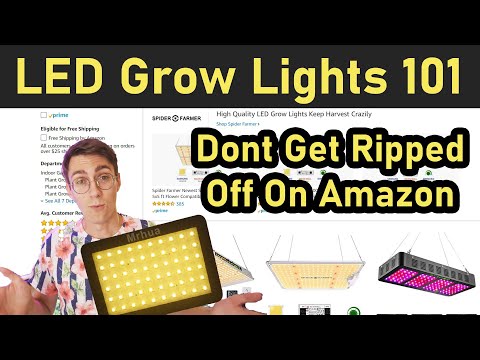
TWO — Cheap LEDs are the most expensive mistake in indoor growing. That $89 "1000W" Amazon special will cost you in stunted plants, missed harvests, and replacement fixtures within a year.
THREE — Match the light to the plant stage. Seedlings want gentle T5s or dimmed LEDs. Vegging plants thrive under blue-heavy spectrums. Flowering plants explode under red-rich, full-spectrum coverage.
The Final Word
In 2026, there has never been a better time to grow food, flowers, or herbs indoors. The technology is mature. The prices are reasonable. The science is settled.
The only question left is: what are you going to grow first?
Pick the right light, and you don't just buy a fixture — you buy a year-round permission slip to grow whatever you want, whenever you want, regardless of season, weather, or geography.
Your indoor sun is waiting. Flip the switch.
Key Takeaways
- Choosing the right hydroponic grow light buying guide means matching the key features to your specific needs and budget
- Read real customer reviews and check the return policy before you commit
- Also covers: how to choose grow lights for hydroponics
- Also covers: grow light features to look for
- Also covers: best grow light specs
- Compare value across models — the priciest option is not always the best fit