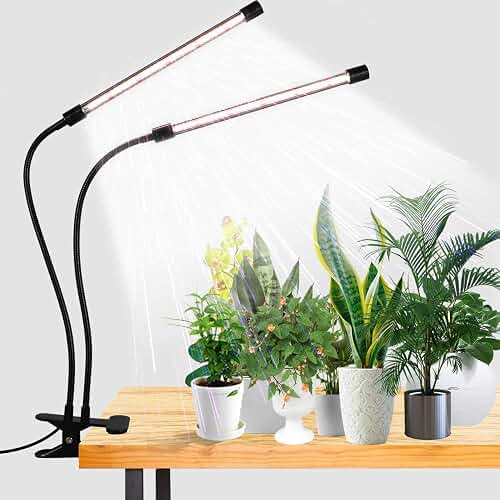
The Truth Nobody Tells You About Grow Light Pricing
Walk into any hydroponics store or scroll through Amazon, and you'll face a dizzying parade of grow lights ranging from $30 desk lamps to $2,000 commercial monsters. The marketing? Aggressive. The specs? Confusing. The stakes? Your entire harvest.
Here's the uncomfortable truth: price alone tells you almost nothing about performance. A $150 light can outgrow a $400 light if you know what to look for. And a $1,000 light can be a complete waste if it doesn't match your space.
This guide cuts through the noise. We're breaking down exactly what you should demand at every price tier, so you stop overpaying for marketing and start investing in actual photons.
> ### KEY TAKEAWAY > You're not buying a light. You're buying photons per dollar over time. Master that mindset, and every purchasing decision becomes crystal clear.
The One Stat That Changes Everything
> PPE (Photosynthetic Photon Efficacy) is the only number that truly matters. It tells you how many usable photons you get per watt of electricity. Budget lights hover around 1.5 umol/J. Premium lights hit 2.8+ umol/J. That difference compounds into hundreds of dollars per harvest.
THE PPE LADDER AT A GLANCE
| Tier | Efficacy Range | Real-World Translation |
|---|---|---|
| Bargain Bin | Under 1.5 umol/J | Hot, hungry, hopeful |
| Budget | 1.5 - 2.0 umol/J | Solid for seedlings and herbs |
| Mid-Tier | 2.3 - 2.7 umol/J | The professional sweet spot |
| Premium | 2.8 - 3.2 umol/J | Squeezing every last photon |
Tier 1: The Budget Zone ($50 - $150)
This is where most beginners start, and frankly, where many should stay until they understand their needs. Budget doesn't have to mean bad, but it absolutely means compromise.
What You SHOULD Get at This Price
- Full-spectrum white light (avoid purple "blurple" lights unless seeding)
- Real wattage disclosure (not inflated "equivalent" wattage)
- At least 1.5 umol/J efficiency
- Passive cooling or quiet fans (cheap fans die fast)
- A 2-year warranty minimum
Red Flags to Run From
- Listings claiming "3000W" that actually draw 100W from the wall
- No PAR map or PPFD data published anywhere
- No-name brands with zero customer service
- Plastic housings that feel like a kid's toy
See It In Action: A Visual Walkthrough
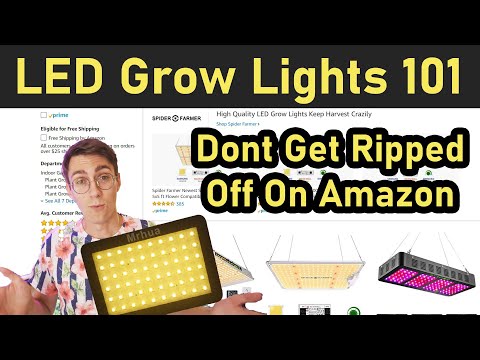
Before you drop a single dollar, watch how real growers compare lights across price tiers. The difference between marketing fluff and actual performance becomes instantly obvious when you see the side-by-side.
Tier 2: The Sweet Spot ($150 - $400)
This is where 80% of serious home growers should live. The jump in quality from budget to mid-tier is dramatic, almost shocking. The jump from mid-tier to premium? Far less noticeable.
What Quality Looks Like Here
| Feature | What to Demand |
|---|---|
| Diode Quality | Samsung LM301B/H or Osram diodes |
| Efficacy | 2.3 - 2.7 umol/J |
| Driver | Meanwell or Inventronics brand |
| Dimmer | Smooth 0-100% control |
| Coverage | Published PPFD maps at multiple heights |
| Warranty | 3-5 years minimum |
The Mid-Tier Magic
These lights typically run cooler, last longer, and produce yields that rival lights costing two to three times more. You get professional-grade diodes without paying for premium branding.
> EXPERT TIP: Look for lights with removable drivers. When a driver fails (and they all do eventually), you want to swap a $40 part, not throw out a $300 fixture.
THE 80/20 RULE OF GROW LIGHTS
> Mid-tier lights deliver roughly 90% of the performance of premium fixtures at 40-50% of the price. Unless you're chasing records or running commercial volumes, this is where your money works hardest.
Tier 3: The Premium League ($400 - $1,500+)
Welcome to the world where every spec is fine-tuned, every component is overbuilt, and every dollar goes toward measurable performance gains. But here's the catch: premium lights only justify their cost if you're maximizing every other variable in your grow.
What Premium Actually Buys You
- 2.8 - 3.2 umol/J efficacy (the highest available)
- Custom spectrum tuning with separate UV and far-red channels
- Bluetooth or WiFi control with scheduling apps
- Modular bar designs for perfect canopy penetration
- Heat-sinked housings with 50,000+ hour rated lifespans
- White-glove customer service and lifetime support
Who Should Actually Buy Premium
- Commercial growers running 24/7 cycles
- Serious hobbyists with 4x4 or larger tents
- Anyone where electricity costs exceed $0.20/kWh
- Growers chasing competition-level yields
The Hidden Cost Calculator
Most buyers obsess over the sticker price and completely ignore the real cost of ownership. A cheap light isn't cheap if it burns through 200 extra watts every single hour for the next three years.
THE TRUE COST FORMULA
> Sticker Price + (Watts x Hours x Days x Years x Electricity Rate) - Yield Value = Your Real Investment
Run the math on a $150 budget light pulling 200W versus a $400 mid-tier light pulling 240W but producing 30% higher yields. Across two years of daily use, the "expensive" light often pays for itself twice over.
The Final Verdict: Match the Light to the Mission
Forget tier loyalty. The smartest grower in any room is the one who buys the right tool for the right job.
| Your Situation | Smart Choice |
|---|---|
| First-time grower, herbs and greens | Budget ($75-$150) |
| Single tent, fruiting plants | Mid-tier ($200-$400) |
| Multiple tents or large canopy | Premium ($500+) |
| Commercial operation | Premium with warranty support |
The Bottom Line
Stop chasing brand names. Stop falling for inflated wattage claims. Start demanding published PPE numbers, named-brand diodes, and PPFD coverage maps. Buy the light that matches your space, your plants, and your ambitions, not the one with the loudest marketing.
Your plants don't care what the box looks like. They only care about the photons hitting their leaves.
Key Takeaways
- Choosing the right budget hydroponic grow lights guide means matching the key features to your specific needs and budget
- Read real customer reviews and check the return policy before you commit
- Also covers: affordable grow lights
- Also covers: cheap vs expensive grow lights
- Also covers: grow light price comparison
- Compare value across models — the priciest option is not always the best fit


